Showing posts with label nasa. Show all posts

Spock’s home system exists in reality!


It takes a little imagination to wish some favorite fictional universes into existence. But, for legions of "Star Trek" fans, they don’t have to wish: one star system really exists in our Milky Way galaxy. In Star Trek lore, Vulcan is the home of logic, learning and the deeply beloved first officer Mr. Spock. While Vulcan is fictional, the star system it belongs to–40 Eridani–is very real. It’s located only 16.5 light-years away from Earth and its primary star can be spotted with the naked eye. So how much is science fiction and how much is science fact?
“Could there be an Earth-like planet in this system? We have no way of knowing that now,” said Karl Stapelfeldt, chief scientist of NASA’s Exoplanet Exploration Program. So while Vulcan (as far as we know) doesn’t exist, a fascinating triple sunset would occur on any rocky planet in the system, because 40 Eridani has three stars that circle each other.
The most massive is 40 Eridani A, a dwarf star that is the mythical Vulcan’s sun. The other two are a pair, orbiting each other at a distance from 40 Eridani A. This binary pair contains a red dwarf (40 Eridani C)­ and a white dwarf star (40 Eridani B). From the surface of Vulcan, “they would gleam brilliantly in the Vulcan sky,” according to Rodenberry in his 1991 letter to Sky & Telescope magazine.

If you believe in science fiction, Mr. Spock’s dreamt-up world lives in the habitable zone of the largest star, 40 Eridani A. The habitable zone, shown as the area in blue-green, is the distance from a star where liquid water is said to exist. Too far away from its sun and Vulcan would freeze like Pluto; too close and it would sizzle like Mercury. Vulcan is perched on the inner edge, lending the world its imagined desert-like quality (at least, in a timeline where the planet remains undestroyed).


But if there were a planet like Vulcan in the 40 Eridani system, would we be able to see it? Not yet. “We don’t yet have a way to detect it, but NASA is working on the technology to make it possible,” Stapelfeldt said.

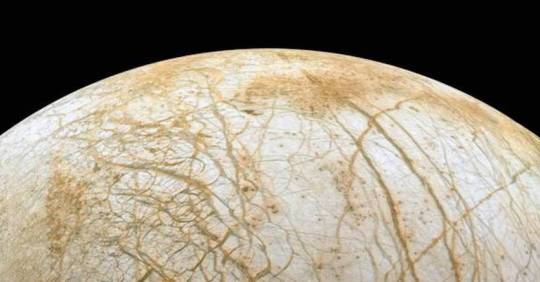
NASA is taking a huge risk flying Juno near Europa

The Juno spacecraft orbiting around Jupiter right now is giving us a lot of reasons to get excited. But there’s one huge worry lurking in the back of NASA scientists’ minds. It’s possible the spacecraft could crash into and contaminate Jupiter’s icy moon Europa, one of the most likely places we might find alien life in the solar system.

SpaceX Cargo and Supplies Launch


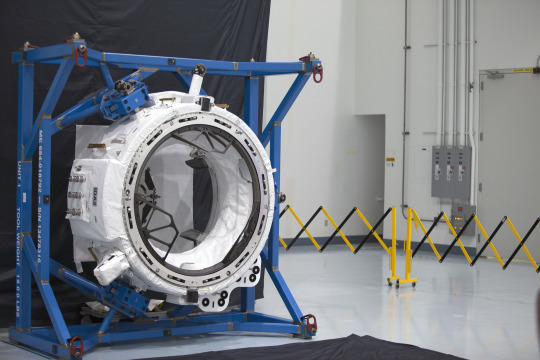
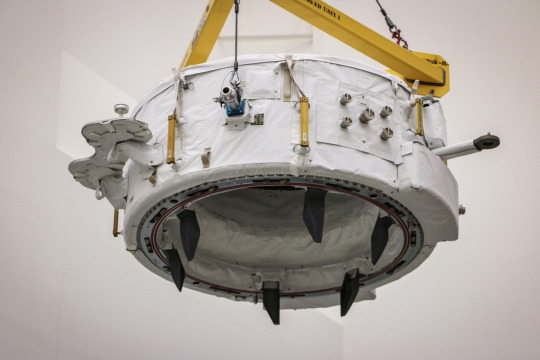
Among the arriving cargo is the first of two international docking adapters, which will allow commercial spacecraft to dock to the station when transporting astronauts in the near future as part of our Commercial Crew Program.


This metallic ring, big enough for astronauts and cargo to fit through represents the first on-orbit element built to the docking measurements that are standardized for all the spacecraft builders across the world.


Its first users are expected to be the Boeing Starliner and SpaceX Crew Dragon spacecraft, which are both now in development.

What About the Science?!

Experiments launching to the station range from research into the effects of microgravity on the human body, to regulating temperature on spacecraft. Take a look at a few:
A Space-based DNA Sequencer


DNA testing aboard the space station typically requires collecting samples and sending them back to Earth to be analyzed. Our Biomolecule Sequencer Investigation will test a new device that will allow DNA sequencing in space for the first time! The samples in this first test will be DNA from a virus, a bacteria and a mouse.
How big is it? Picture your smartphone…then cut it in half. This miniature device has the potential to identify microbes, diagnose diseases and evaluate crew member health, and even help detect DNA-based life elsewhere in the solar system.
OsteoOmics


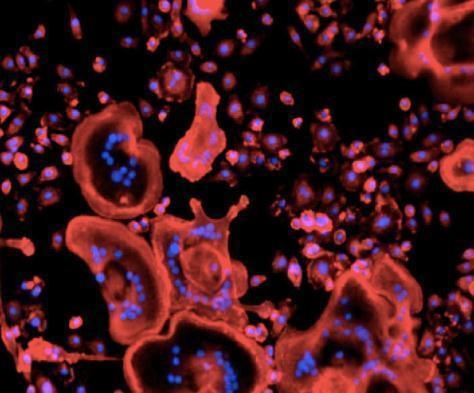
OsteoOmics is an experiment that will investigate the molecular mechanisms that dictate bone loss in microgravity. It does this by examining osteoblasts, which form bone; and osteoclasts, which dissolves bone. New ground-based studies are using magnetic levitation equipment to simulate gravity-related changes. This experiment hopes to validate whether this method accurately simulates the free-fall conditions of microgravity.
Results from this study could lead to better preventative care or therapeutic treatments for people suffering bone loss, both on Earth and in space!
Heart Cells Experiment


The goals of the Effects of Microgravity on Stem Cell-Derived Heart Cells (Heart Cells) investigation include increasing the understanding of the effects of microgravity on heart function, the improvement of heart disease modeling capabilities and the development of appropriate methods for cell therapy for people with heart disease on Earth.
Phase Change Material Heat Exchanger (PCM HX)


The goal of the Phase Change Material Heat Exchanger (PCM HX) project is to regulate internal spacecraft temperatures. Inside this device, we’re testing the freezing and thawing of material in an attempt to regulate temperature on a spacecraft. This phase-changing material (PCM) can be melted and solidified at certain high heat temperatures to store and release large amounts of energy.

New Dwarf Planet in our Solar System


Our map of the solar system still has huge unexplored chunks, which astronomers just proved with the discovery of a dwarf planet hanging out around Neptune and Pluto.

The tiny, 700-kilometer object is called RR245, and astronomers estimate it's about twice the distance that Neptune is from the sun; it takes the dwarf planet about 700 years to revolve all the way around the sun.

"The icy worlds beyond Neptune trace how the giant planets formed and then moved out from the sun," Michele Bannister, a postdoctoral researcher who worked on the project, said in a statement. "They let us piece together the history of our solar system. But almost all of these icy worlds are painfully small and faint: It's really exciting to find one that's large and bright enough that we can study it in detail."

Future research could help us determine the role that dwarf planets played in the formation of the early universe.

It's clear we have a lot more exploring to do.

Solar System: Things to Know This Week


Our solar system is huge, let us break it down for you. Here are a few things to know this week:

1. Up at Jupiter, It’s Down to Business

Ever since our Juno mission entered Jupiter’s orbit on July 4, engineers and scientists have been busy getting their newly arrived spacecraft ready for operations. Juno’s science instruments had been turned off in the days leading up to Jupiter orbit insertion. As planned, the spacecraftpowered up five instruments on July 6, and the remaining instruments should follow before the end of the month. The Juno team has also scheduled a short trajectory correction maneuver on July 13 to refine the orbit.

2. The Shadows Know


Scientists with our Dawn mission have identified permanently shadowed regions on the dwarf planet Ceres. Most of these areas likely have been cold enough to trap water ice for a billion years, suggesting that ice deposits could exist there now (as they do on the planet Mercury). Dawn is looking into it.

3. Frosts of Summer


Some dusty parts of Mars get as cold at night year-round as the planet’s poles do in winter, even in regions near the equator in summer, according to new findings based on Mars Reconnaissance Orbiter observations. The culprit may be Mars’ ever-present dust.

4. Can You Hear Me Now?


The OSIRIS-REx spacecraft is designed to sample an asteroid and return that sample to Earth. After launch in Sept., the mission’s success will depend greatly on its communications systems with Earth to relay everything from its health and status to scientific findings from the asteroid Bennu. That’s why engineers from our Deep Space Network recently spent a couple of weeks performing detailed tests of the various communications systems aboard OSIRIS-REx.

5. Cometary Close-ups


The Rosetta spacecraft has taken thousands of photographs of Comet 67/P. The European Space Agency (ESA) is now regularly releasing the highest-resolution images. The word “stunning” is used a lot when referring to pictures from space—and these ones truly are
Shadow of Surveyor 1

Shadow of Surveyor 1

Shadow of Surveyor 1

Image of Surveyor 1’s shadow against the lunar surface in the late lunar afternoon, with the horizon at the upper right. The Surveyor program was a NASA program that, from June 1966 through January 1968, sent seven robotic spacecraft to the surface of the Moon. Its primary goal was to demonstrate the feasibility of soft landings on the Moon. Surveyor 1, the first of the five Surveyor missions to make a successful soft landing, proved the spacecraft design and landing technique. In addition to transmitting over 11,000 pictures, it sent information on the bearing strength of the lunar soil, the radar reflectivity, and temperature.

Five Things to Know About NASA Astronaut Kate Rubins


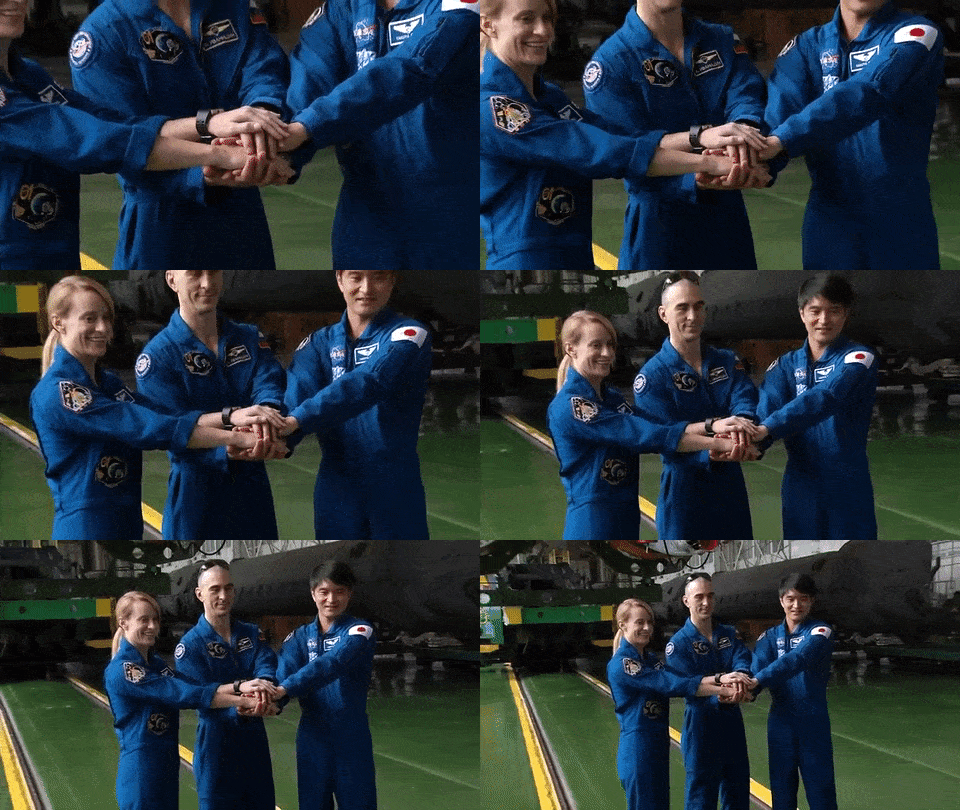
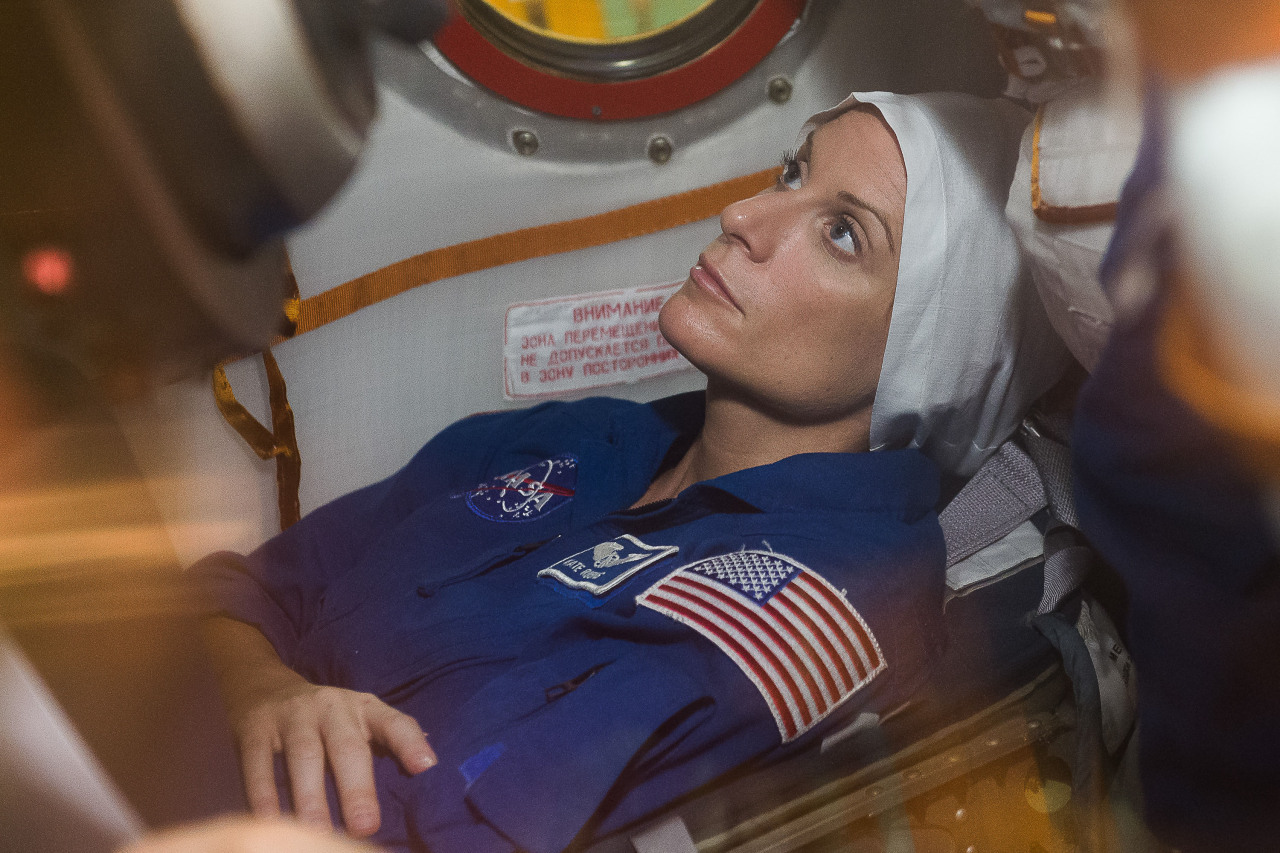
Among the newest crew on the International Space Station is U.S. astronaut Kate Rubins, who will assume the role of Flight Engineer for Expeditions 48 and 49. Here are five things you should know about her:
1. She was chosen from a pool of over 3,500 applicants to receive a spot on our 2009 astronaut training class.


image

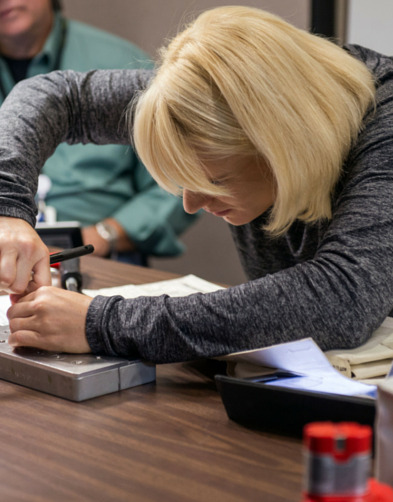
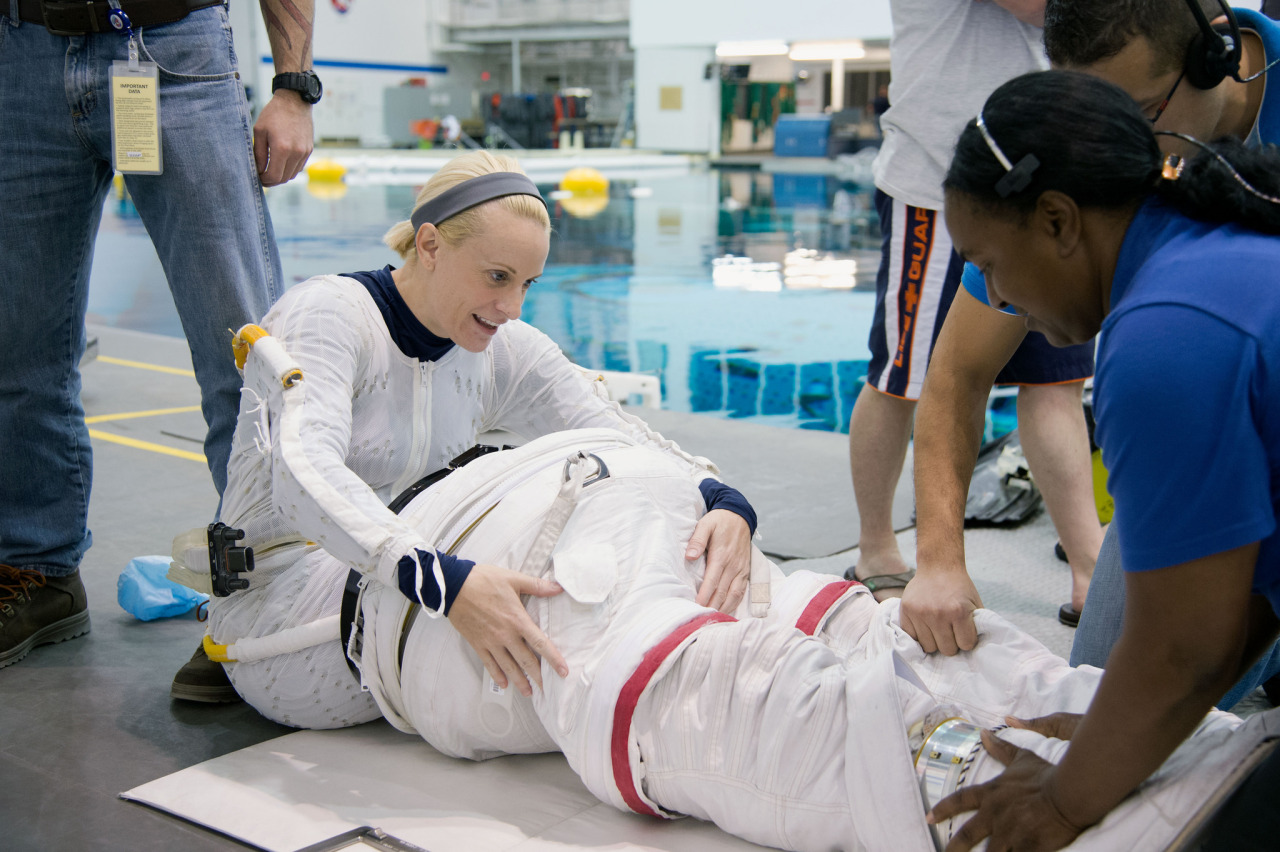
After being selected, Rubins spent years training at Johnson Space Center to become an astronaut. She learned how to use the complex station systems, perform spacewalks, exercise in space and more. Some training even utilized virtual reality.
2. She has a degree in cancer biology.


image

After earning a Bachelor of Science degree in Molecular Biology from the University of California, San Diego in 1999, Rubins went on to receive a doctorate in Cancer Biology from Stanford University Medical School Biochemistry Department and Microbiology and Immunology Department in 2005. In other words, she’s extremely smart.
3. Her research has benefited humanity.


image

Rubins helped to create therapies for Ebola and Lassa viruses by conducting research collaboratively with the U.S. Army. She also aided development of the first smallpox infection model with the U.S. Army Medical Research Institute of Infectious Diseases and the Centers for Disease Control and Prevention. NBD. It will be exciting to see the research come out of a mission with a world-class scientist using a world-class, out-of-this-world laboratory!
4. She is scheduled to be the first person to sequence DNA in space.


image

During her time at the space station, Rubins will participate in several science experiments. Along with physical science, Earth and space science and technology development work, she will conduct biological and human research investigations. Research into sequencing the first genome in microgravity and how the human body’s bone mass and cardiovascular systems are changed by living in space are just two examples of the many experiments in which Rubins may take part.
5. In her spare time, she enjoys scuba diving and triathlons…among other things.


image

Rubins was on the Stanford Triathlon team, and also races sprint and Olympic distance. She is involved with health care/medical supply delivery to Africa and started a non-profit organization to bring supplies to Congo. Her recent pursuits involve flying airplanes and jumping out of them – not simultaneously. 


image

Rubins is scheduled to arrive at the International Space Station at 12:12 a.m. Saturday, July 9. After her launch on Wednesday, July 6, the three crew members traveled 2 days before docking to the space station’s Rassvet module. 

Watch live coverage of docking and their welcoming starting at 11:30 p.m. EDT Friday, July 8 on NASA Television.

Make sure to follow us on Tumblr for your regular dose of space: http://nasa.tumblr.com
New International Space Station astronaut :))